The French Church at Threadneedle Street
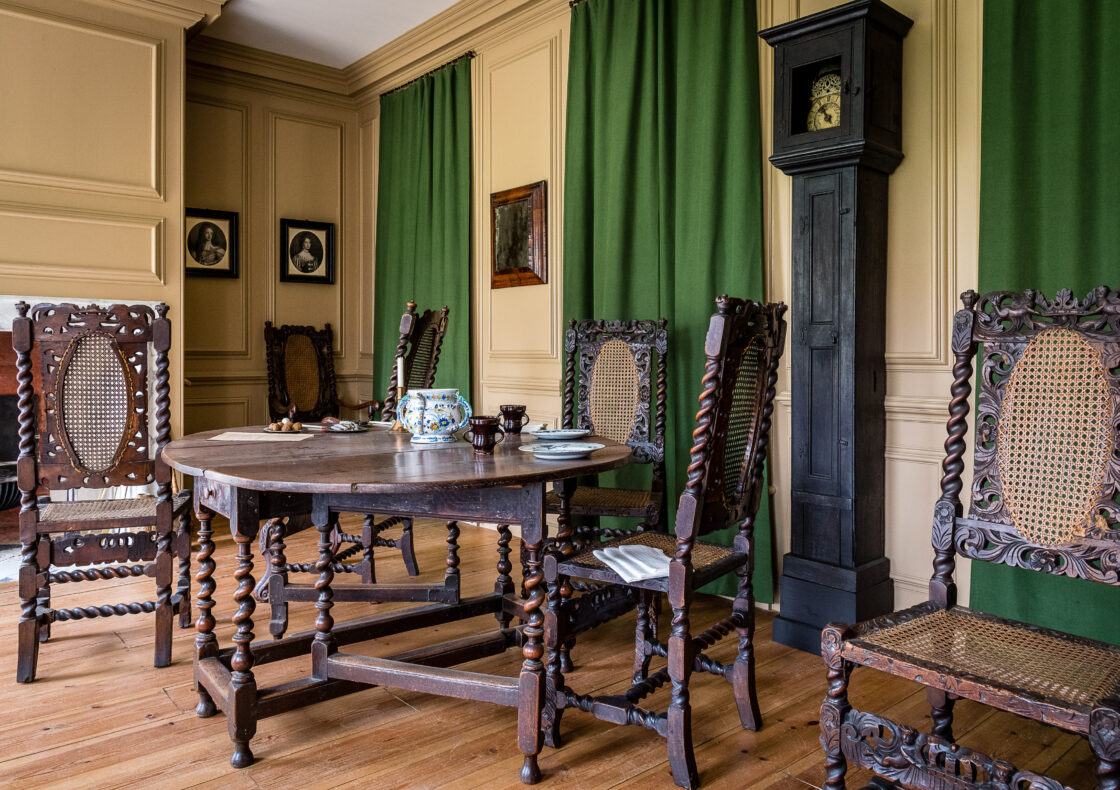
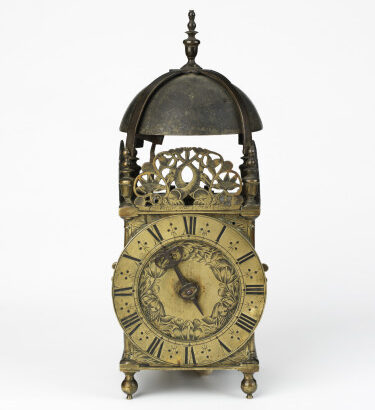
Many Huguenots attended French services at their local church. A French church was opened at Threadneedle Street in the 1500s when the first Huguenots moved to England. The services followed the traditions of Calvinism, a branch of Protestant Christianity, and were conducted in French. The church at Threadneedle Street, among other French churches across England, played a large role in supporting Huguenot refugees during this time.
Brass lantern clock inscribed ‘Tho. Wheeler neare ye french Church’, c.1685, Object number: 35/2016
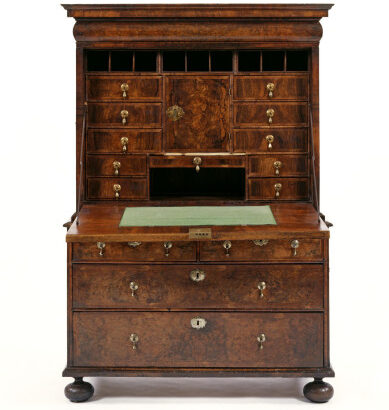
Guilbaud Cabinet, about 1685
John Guilbaud was a cabinet maker at the Crown and Looking Glasse in Long Aker. It is likely that Guilbaud was a French Protestant, as Huguenot records show a Jean Guilbaud married the daughter of a carver in 1691. Huguenots practiced many trades including cabinetmaking, fan making, silver– and goldsmithing, printing and clockmaking.
Walnut-veneered writing cabinet bearing the trade label of John Guilbaud, retailed in London, c.1695-1700, Object number: 60/2005
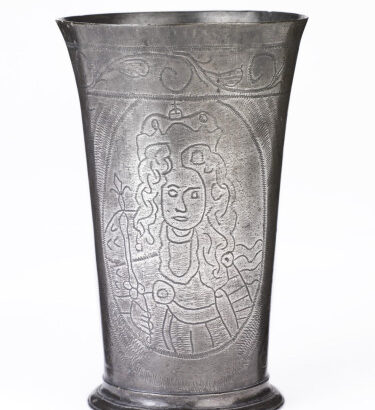
William and Mary Commemorative Beaker, about 1689
On 5 May 1689, William III issued a declaration that encouraged Huguenots to move to England and offered them support. He introduced the Royal Bounty, moneys that were distributed to support Huguenot refugees and for specific payments such as funerals, emigration, and medical care. The first grant was made in 1686 and the last grant was given in 1876.
Commemorative pewter beaker with wrigglework portraits of William III and Mary II, probably Dutch, about 1689-1694. Object number: 157/2010
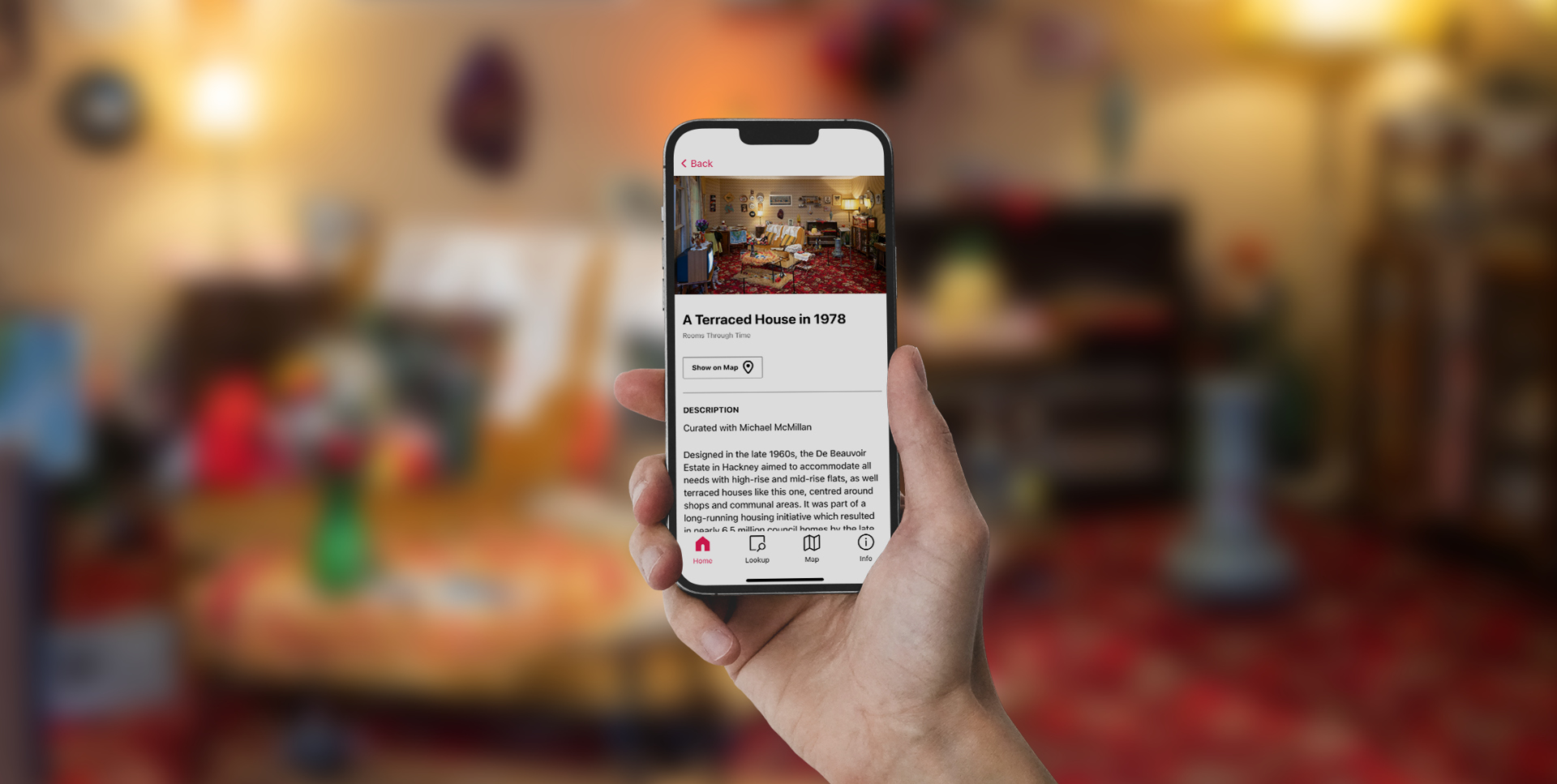
Free digital guide
Explore Museum of the Home with our digital guide on Bloomberg Connects, the free arts and culture app.
